


A sensory pillow emphasizes sensory qualities such as touch; a weighted pillow includes added weight, so the names do not describe the same feature. When comparing a sensory pillow vs weighted pillow in 2026, check the actual construction, stated age guidance, intended use, and care instructions rather than treating either label as a promise of better sleep.
- Sensory pillow vs weighted pillow is a comparison of sensory features and added weight, not two guaranteed sleep solutions.
- Filljoy describes Comfort Calm Pillow as a soft, cozy buddy to hug during wind-down, not explicitly as weighted.
- Check confirmed age guidance and intended use before adding any pillow to a child's routine.
- Choose a bedtime activity around your child's preferences; neither a pillow nor a purchase is required.
Sensory pillow vs weighted pillow: what should parents check?
Check what the pillow contains and how the manufacturer says to use it before comparing its appearance or bedtime language. A sensory description does not establish that a pillow is weighted, and added weight does not establish that a product belongs in a child's sleep space.
For your 2026 shortlist, use the comparison below to separate a general product category from a confirmed product description. The Filljoy product described here has a narrow, useful role: a soft buddy to hug while winding down.
| Option | Best for | What the description establishes | Advantage | Limitation to check |
|---|---|---|---|---|
| Sensory pillow | Parents comparing touch-focused features | The term points toward a sensory experience; individual features need confirmation | You can compare the particular features your child enjoys | The label alone does not establish weight, age suitability, or sleep use |
| Weighted pillow | Parents specifically evaluating added weight | Added weight is the defining distinction | It identifies a construction feature you can investigate | The name does not establish an appropriate weight or use for your child |
| Comfort Calm Pillow | Parents looking for a soft buddy to hug during wind-down | Its description presents a soft, cozy buddy for hugging | Its stated purpose matches a simple hugging activity | The description does not establish added weight, age guidance, or overnight suitability |
A pillow can be both sensory and weighted if its actual specifications support both descriptions. Do not assume that overlap from a product photograph, an animal shape, or words such as calm and comfort.
Why this matters
Bedtime shopping gets confusing when a feeling becomes a product specification. Cozy describes an experience; it does not tell you what is inside a pillow, whether its cover comes off, or who should use it.
For a parent, the useful question is not which label sounds more reassuring. It is whether the documented features match the activity you have in mind. Sitting together for a story, hugging a buddy while talking, and sleeping with an item are different uses.
Keep those decisions separate. You can like a pillow's appearance and still wait for clearer instructions before choosing it for your child.
Sensory pillows: best for comparing specific touch features
A sensory pillow is not a single construction standard. Read beyond the category name to find out what creates the sensory experience: the surface, filling, shape, or another explicitly described feature.
The practical advantage is choice. You can compare a documented feature with something your child already enjoys touching or holding, rather than choosing an unfamiliar sensation because a listing calls it calming.
The limitation is ambiguity. A sensory label alone does not establish removable covers, washable filling, pressure, vibration, temperature effects, or any other feature. Each of those requires its own clear statement.
Before choosing a sensory pillow, ask:
- What is the sensory feature? Look for an actual description, not just a mood word.
- Does your child want that experience? Offer a choice rather than presenting the item as something they should enjoy.
- What use do the instructions describe? Distinguish awake activities from anything involving sleep.
- What age guidance applies? Use the product's stated guidance, not the apparent age of a child in a photograph.
Choose documented features over a broad sensory label. A simple description is more useful than a long list of benefits that never explains the product itself.
Weighted pillows: best for evaluating added weight specifically
A weighted pillow contains added weight. That makes its construction different from an ordinary soft pillow, but it does not tell you whether the item is appropriate for your child or the routine you are planning.
The advantage is specificity when the listing provides it. A clearly stated product weight and clear use instructions let you evaluate the feature you are actually considering. Without those details, the word weighted leaves essential questions unanswered.
The limitation is that extra weight creates an additional decision, not an automatic improvement. Do not transfer weight-selection advice from a different product category or assume that a familiar-looking pillow is suitable because your child likes hugging cushions.
For a weighted option, look for the stated total weight, filling information, intended placement, age guidance, and any restrictions. If the instructions leave you unsure about your child's situation, ask the manufacturer for clarification and discuss individual health or developmental questions with your child's clinician.
Do not choose added weight merely because it sounds more effective. Decide whether that feature belongs in the activity at all before comparing individual products.
Why sensory and weighted pillow choices vary
The useful differences are in the product details and your intended activity. Use these factors for a 2026 comparison instead of ranking every pillow on a single scale from ordinary to calming.
- Construction. A touch-focused description and a stated added weight answer different questions. Record each separately.
- Age guidance. A product's confirmed age guidance matters more than a category-wide recommendation or a lifestyle photograph.
- Intended use. Holding an item during an awake story is not the same decision as placing it in a sleep space.
- Care instructions. Check which components can be cleaned and how. Do not assume the whole pillow is washable.
- Child preference. Ask whether your child wants to hold, touch, or simply look at the item. A preference is not a medical assessment.
- Routine fit. Consider whether you want an object to hug or an activity to do together. Those are different shopping goals.
These factors also explain why a more elaborate product is not automatically a better match. A clearly described soft buddy can meet a straightforward preference without added weight or extra features.
How do you check a pillow before adding it to bedtime?
Use the same order for every product on your 2026 shortlist. It keeps appealing photos from replacing the information you need to make a decision.
- Choose the activity. Decide whether you are shopping for awake story time, an optional hug, or another clearly defined use. Do not combine those decisions with overnight use.
- Read the label. Identify the exact product and its stated features. Separate explicit facts from words describing a hoped-for feeling.
- Check age guidance. Find the manufacturer's guidance for that item. If it is unclear, ask before treating the product as suitable for your child.
- Check care. Read cleaning and inspection instructions before the item becomes part of a familiar routine.
- Offer a choice. Once suitability is established, let your child choose whether to include it. Keep an equally acceptable option without the pillow.
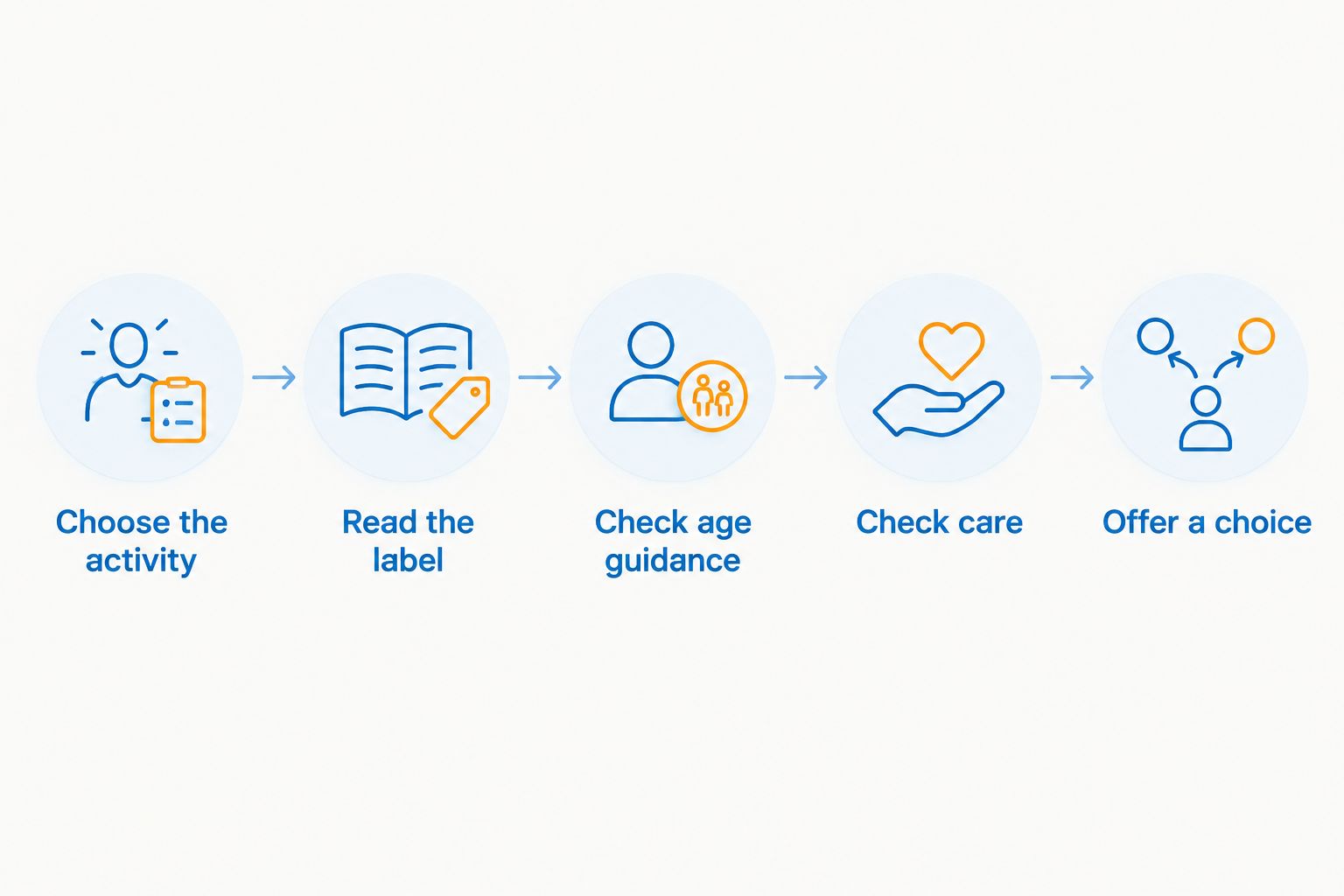
This sequence also gives you a useful stopping point. If age guidance or intended use remains unclear, pause the purchase rather than filling the gap with advice about a different item.
For families with children of different ages, check each child's use separately. Sharing a household does not make a product's guidance transferable between siblings.
Where does Comfort Calm Pillow fit?
Comfort Calm Pillow's description presents a soft, cozy buddy for a child to hug when it is time to wind down. That supports a straightforward product description, not a claim about added weight, treatment, or sleep outcomes.
Filljoy is a fit for parents seeking a soft buddy to hug during wind-down. The advantage is that this stated purpose is easy to connect to an optional family activity. The limitation is equally important: the description does not establish the product's weight, age guidance, cleaning method, or suitability for overnight use.
For Filljoy sensory pillow shopping, keep those boundaries visible. Do not reinterpret the word calm in the product name as evidence of a medical benefit or a result your child should experience.
A practical next move is to check the current product information for the details relevant to your household. Ask about anything unclear before deciding where and how to use the pillow.
Can a sensory pillow also be weighted?
A sensory pillow can also be weighted when its construction includes added weight. The categories overlap only when the actual product details support both descriptions.
Check each feature independently. A soft exterior does not establish added weight, and added weight does not establish a particular surface texture or any sleep benefit.
Does a weighted pillow help children sleep better?
A weighted label alone does not establish that a pillow helps children sleep better. It describes a construction feature, not a guaranteed outcome or a reason to skip product-specific guidance.
Choose based on documented use and your child's preferences. If your question concerns persistent sleep difficulties or a health condition, take that question to your child's clinician rather than asking a product description to answer it.
Can you build a cozy routine without either pillow?
You can build a cozy routine without a sensory pillow or a weighted pillow. Reading together, talking about the day, or offering a familiar screen-free activity can be the whole plan.
If your child enjoys animal coloring, offer it as an optional activity before the sleep portion of the evening, using materials appropriate for the child. There is no need to finish a page or turn the activity into another bedtime requirement.
A simple way to make the choice feel smaller
For your 2026 routine, start with what your child already likes rather than a shopping category. Ask whether they would prefer a story, quiet conversation, or an appropriate coloring activity, then consider whether a pillow adds anything they actually want.
Keep the decision reversible. If a suitable pillow becomes part of awake wind-down time, your child can still choose not to hold it on another evening. The object is an option, not a task to complete.
Avoid presenting a new purchase as something that will make bedtime work. Describe the available choice plainly: a buddy to hug, a book to read, or an activity to put away when everyone is ready.
That approach keeps the product in its proper role. Your family routine does not need to demonstrate that the item was necessary or produce a particular result.
FAQ
What's the difference between a sensory pillow and a weighted pillow?
A sensory pillow emphasizes sensory qualities such as touch, while a weighted pillow includes added weight. A product can fit both descriptions, but its specifications must confirm that overlap.
Is a weighted pillow better than a sensory pillow for bedtime?
A weighted pillow is not automatically better than a sensory pillow for bedtime. Compare the exact intended use, age guidance, construction, and your child's preferences rather than ranking the labels.
Is Comfort Calm Pillow a weighted pillow?
Comfort Calm Pillow's supplied description does not identify it as weighted. Filljoy describes it as a soft, cozy buddy to hug during wind-down; check current specifications rather than assuming added weight.
What age can a child use a sensory pillow?
Use the specific product's confirmed age guidance rather than a universal age for sensory pillows. A category name or product photograph does not establish suitability for your child.
Can my child sleep with a sensory pillow overnight?
An item's sensory label does not establish that it is suitable for overnight use. Check product-specific instructions and age guidance, and keep awake hugging activities separate from sleep-space decisions.
What should I check before buying a pillow in 2026?
Before buying a pillow in 2026, check its intended activity, construction, age guidance, care instructions, and any use restrictions. For a weighted option, also confirm the stated weight rather than borrowing advice for a different product.
Do I need a pillow to make bedtime cozy?
You do not need a pillow to make bedtime cozy. A story, conversation, or suitable screen-free activity can be your routine without an additional purchase.
One last thing
Write down the activity you want before writing down the product you want. If your answer is simply something soft to hug while we read, use that as your buying criterion instead of adding features your family never asked for.
If your child would rather turn the page or finish a drawing, that is useful information too. A cozy routine can leave room for a buddy without making the buddy essential.