


Table of Contents
- How to Clean Plush Toys: Start With the Care Label
- How to Wash Stuffed Animals in the Machine
- Hand-Washing Stuffed Animals: The Gentle Route
- How to Clean Stuffed Animals Without Washing
- How to Dry Stuffed Animals Without Damaging Them
- How to Make Plush Toys Soft Again After Washing
- Special Cases: Electronics, Delicate Materials, and Allergy Care
- Conclusion
- Frequently Asked Questions
Last Updated: October 19, 2026
How to Clean Plush Toys: Start With the Care Label
Learning how to clean plush toys starts with one small step: read the tag. Most stuffed animals carry a care label that tells you what the fabric and stuffing can handle. At Fill Joy, we know a beloved teddy bear gets dragged through mud, snacks, and colds, so cleaning it safely matters.
Ignore the label and you risk a lumpy, matted toy that never recovers.
Decoding Washing Instructions and Fabric Symbols
Care labels use a short set of symbols:
- A washtub with a number: machine wash at that water temperature.
- A washtub with a hand: hand wash only.
- A triangle with an X: do not bleach.
No label at all? Treat the toy as delicate and hand wash it. That is the safest default for any plush toy.
When a Plush Toy Should Not Go in the Wash
Some toys should never touch water. Check for these first:
- Battery packs, sound boxes, or wires hidden inside.
- Glued-on eyes, sequins, or fragile trim.
- Vintage or handmade toys with loose stitching.
For these, spot cleaning and airing out are your best tools, water can short electronics or melt glue.
How to Wash Stuffed Animals in the Machine
Machine washing works well for sturdy, washable plush toys. A gentle cycle with cold water handles most cotton and polyester stuffed animals safely.
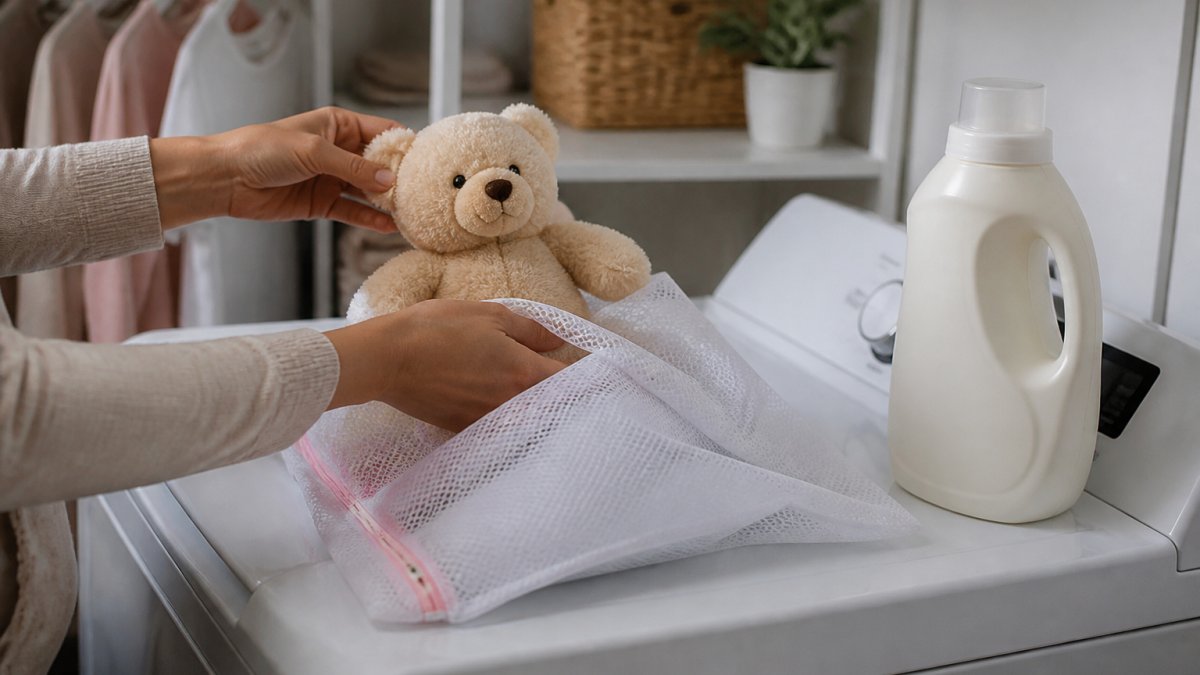
Preparing the Toy: Mesh Bag, Pillowcase, and Pretreatment
Prep takes two minutes and saves a repair job:
- Brush off loose dirt with a soft-bristled brush.
- Treat visible stains with a little mild detergent and a damp cloth.
- Place the toy in a mesh laundry bag or a zippered pillowcase.
- Tie off any loose ribbons or strings.
The bag keeps small parts from snagging and stops the toy from banging around the drum.
Cold Water, Gentle Cycle, and the Right Detergent
Set the machine to cold water and a gentle cycle. Use a small amount of mild liquid detergent, not powder, which leaves residue in the stuffing.
- Skip bleach and fabric softener.
- Choose a short wash, not a long soak.
- Run a second rinse if your machine allows it.
Cold water protects color and keeps glue from softening; gentle cycles reduce matting.
Hand-Washing Stuffed Animals: The Gentle Route
Hand washing is the safest method for delicate materials, older toys, and anything with fragile trim, giving you full control over pressure and temperature.
Fill a basin with cool water and a few drops of mild liquid detergent. Submerge the toy and gently squeeze the suds through the fabric, do not wring or twist.
How to Clean Stuffed Animals Without Washing
Not every plush toy needs a full bath. Surface cleaning handles dust, light dirt, and odors between deeper washes, and it's the only safe option for toys with electronics or glued details.
Spot Cleaning Stains, Surface Dirt, and Odors
Mix a little mild detergent with cool water. Dab the stain with a clean cloth, working from the outside in, then rinse the cloth and blot again. For odors, sprinkle baking soda on the toy, let it sit, then brush it off, it lifts smells without soaking the stuffing.
Vacuuming, Baking Soda, and Dry Methods
A vacuum with a soft brush attachment on the lowest suction removes surface dust; hold the toy firmly and work in short passes.
- Vacuum first to pull out loose dust.
- Follow with a baking soda sprinkle for odor.
- Brush the fabric gently to restore the nap.
For a deeper refresh without water, seal the toy in a plastic bag with baking soda for a few hours, then shake it out and vacuum.
How to Dry Stuffed Animals Without Damaging Them
Drying is where most plush toys get ruined. High heat shrinks fabric, softens glue, and clumps stuffing, but under-drying is just as damaging: trapped moisture inside the stuffing is the leading cause of mildew and that sour odor that never quite washes out. The goal is a dry core, not just a dry surface.
Why Stuffing Holds Water Longer Than Fabric
Plush fabric dries in hours, but the dense, compressed stuffing inside is shielded by the outer fabric and can stay damp for a day or more after the surface feels dry, which is why a toy that seems fine can smell musty two days later. Treat the surface and the core as two separate drying jobs.
Pressing Out Water Before You Dry
Never wring or twist a wet plush toy, that breaks seams and permanently distorts stuffing. Instead:
- Lay the toy on a clean, dry bath towel and fold the towel over it.
- Press down firmly with your palms, working from head to limbs, to push water into the towel.
- Swap in a dry towel and repeat once or twice until the towel stops absorbing much.
- Reshape the toy, ears, limbs, tail, head, while it is still damp, so it dries in the correct silhouette.
Air-Drying: Airflow, Position, and Rotation
Air drying is the safest method for nearly every plush toy. What matters is airflow, position, and rotation:
- Airflow beats heat. A fan on low, a cracked window, or a spot near (not in) a heating vent moves moisture out far faster than still air. Direct sunlight fades dyes and can make some fabrics brittle, so aim for bright but indirect light.
- Dry it standing or hanging, not flat. Lying flat traps moisture against the underside. Prop the toy upright or hang it by a loop so air reaches all sides.
- Rotate every few hours. Turn the toy over and reposition the limbs so no single side stays against a surface.
A small toy may air-dry in a few hours; a large, densely stuffed bear can take a full day or more.
How to Tell When a Plush Toy Is Fully Dry
A dry surface is not the test. Use these checks:
- The squeeze test: press the center of the toy firmly. If it feels cool or damp against your palm, the core is still wet.
- The smell test: a faint musty or sour note means moisture is still trapped inside.
- The weight test: compare it to how it felt before washing. A noticeably heavier toy is still holding water.
If any check fails, keep drying. Do not put the toy back on a bed or in a toy bin until it passes all four.
If the Label Allows Tumble Drying
Only tumble dry if the care label explicitly permits it, and only on the lowest heat setting. Check the toy every few minutes, remove it while slightly damp, and finish with air drying. Never tumble dry toys with glued-on eyes, electronics, or sound boxes, heat softens adhesive and warps plastic.
Preventing Mildew Before It Starts
Mildew needs moisture and stillness. To prevent it:
- Never store a plush toy in a sealed bin or plastic bag while it is even slightly damp.
- Avoid drying in a closed, humid bathroom or a damp basement.
- In humid weather, run a fan or dehumidifier near the drying toy.
The surface drying first is a trap. Press out water with a towel, dry upright with airflow, rotate every few hours, and use the squeeze, smell, weight, and seam checks before the toy goes back in the toy bin.
How to Make Plush Toys Soft Again After Washing
Washing can leave a plush toy stiff or matted. The fix is simple: fluff and brush.
Once fully dry, pull the stuffing back into shape with your fingers and use a soft-bristled brush to lift the fibers.
For matted fur, brush lightly in the direction of the nap.
The two habits that keep plush toys soft are cold water and thorough air drying. Skip heat, skip wringing, and brush the fabric once it's dry.
Special Cases: Electronics, Delicate Materials, and Allergy Care
The toys that actually cause trouble fall outside the standard washable plush category: battery-operated toys, weighted toys, glued-on details, and toys that go into a child's mouth every day. Here's how to handle each.
Toys With Electronics, Batteries, or Sound Boxes
Any plush toy with a battery pack, sound module, or wiring should never be submerged or machine-washed. The safe routine:
- Remove the batteries first. Even if the compartment seems sealed, take them out before any cleaning.
- Check the compartment. Wipe the battery bay with a dry cloth only, never a damp one.
- Spot clean the fabric with a barely damp cloth and a drop of mild detergent, keeping moisture well away from the module.
- Air dry completely before reinstalling batteries, and test the sound or light function only after the toy is fully dry.
- Never tumble dry an electronic plush toy, heat can warp components and soften adhesive.
If the module is removable, take it out and wash the fabric shell according to its own care label.
Specialty Materials and Construction
Different materials need different handling. Test any cleaning solution on a hidden spot first.
- Faux fur: brush the nap with a soft-bristled brush while damp and again when dry to prevent matting. Avoid hot water, which can set curls and crimp fibers.
- Wool and mohair: hand wash only, in cool water, with a wool-safe or very mild detergent. Never agitate or wring, wool felts with friction. Roll in a towel to remove water and dry flat, reshaping as it dries.
- Weighted toys: these often contain plastic pellets, glass beads, or grain filling that should not be soaked. Spot clean the surface and air dry thoroughly; check the seams for any filling that has worked loose.
Sanitizing Versus Removing Visible Dirt
Ordinary washing with detergent and water removes visible dirt, oils, and many germs, but it is not the same as disinfecting. Heat and harsh chemicals that kill germs can also shrink fabric, melt glue, and damage stuffing.
For illness-related cleaning, the safest approach is usually a thorough wash with mild detergent and complete drying, following the care label.
Allergy-Conscious and Infant Toy Care
For children with sensitive skin or allergies, and for toys that are frequently mouthed:
- Choose a mild, fragrance-free detergent and skip fabric softener, which leaves a residue on fibers.
- Run an extra rinse cycle, or rinse by hand until the water runs clear, to remove detergent residue that can irritate skin.
- Avoid scented sprays and fabric refreshers on toys that go near a baby's face.
Keep a small spray bottle of plain water and a microfiber cloth near the toy bin for quick spot cleans between full washes, it handles most everyday grime without a trip through the laundry.
Electronics, weighted filling, wool, and glued details each need their own approach. When a toy cannot be fully washed, spot clean, air dry completely, and remember that ordinary washing removes dirt and many germs but is not the same as disinfecting.
Conclusion
Plush toys take a beating, and cleaning them the wrong way can leave them lumpy or ruined. Start with the care label, choose the gentlest method that works, and always dry thoroughly.
If you want a cuddly companion that's built for real life, Fill Joy's Comfort Calm Pillow is designed with a machine-washable, removable cover and soft, breathable fabric.
Frequently Asked Questions
Can you put plush toys in the washing machine?
Many plush toys can go in the machine, but only if the care label allows it. Check the label first, then place the toy inside a mesh laundry bag or pillowcase to protect seams and fabric. Use cold water on a gentle cycle with a mild liquid detergent, and skip the bleach. Toys with electronics, sound boxes, or fragile embellishments should be spot cleaned instead. If the label is missing or unclear, hand washing is the safer choice for keeping the toy intact.
How do you clean a plush toy without washing it?
You can clean a plush toy without water by vacuuming surface dust with a soft-bristled brush attachment, then spot cleaning stains with a damp cloth and a little mild detergent. For odors, sprinkle baking soda over the toy, let it sit for 15 to 30 minutes, then brush or vacuum it away. This dry approach works well for toys with electronic components or delicate materials that cannot handle a full wash, and it keeps the stuffing from clumping.
How do you make plush toys soft again after washing?
After washing, air dry the toy completely, then fluff the stuffing by gently squeezing and massaging it back into shape. A few minutes in a dryer on low heat with a clean towel can help restore softness, but check the care label first. A soft-bristled brush run over the fabric lifts matted fibers. Avoid high heat, which can melt synthetic fibers and leave the toy stiff or misshapen.
How often should you clean plush toys?
A good rule is to wash plush toys every two to four weeks if your child sleeps with them nightly, and sooner if they have been sick, dropped outdoors, or visibly soiled. Spot clean surface dirt as it appears between washes. For children with allergies or sensitive skin, a more frequent routine helps reduce dust and dust mites. Always confirm the toy's care label before washing so the fabric and stuffing stay in good condition.