


Table of Contents
- Why Children Need a Huggable Comfort Pillow
- Kids Pillow Safety: What Parents Should Know
- Choosing the Right Kids Body Pillow for Your Child
- Machine-Washable Kids Pillow: Easy Care for Busy Parents
- Weighted Pillow for Kids: When Extra Support Helps
- How a Comfort Pillow Fits Into Your Bedtime Routine
- Common Mistakes Parents Make When Selecting a Comfort Pillow
- Conclusion
- Frequently Asked Questions
Last Updated: October 18, 2026
Why Children Need a Huggable Comfort Pillow
A huggable comfort pillow for kids is more than bedtime furniture. It's a tactile tool that helps children transition from playtime to sleep, offering something soft and familiar to hold during wind-down. For parents navigating bedtime resistance, anxiety, or sensory sensitivities, a well-chosen pillow signals calm.
Children process the world through touch. A pillow designed for hugging gives their hands something purposeful to do while their mind settles, reducing fidgeting and creating a sleep ritual children look forward to.
The real value is what the pillow represents: comfort, consistency, and permission to relax.
Kids Pillow Safety: What Parents Should Know
Before introducing any new sleep item, safety comes first. Here's what matters most for kids pillow safety.
Age-Appropriate Design Matters
Children under age 2 have different sleep safety needs; soft pillows and plush items can pose risks in cribs.
Material Safety and Allergens
Breathable materials reduce overheating risk during sleep. If your child has sensitive skin or allergies, ask about specific materials, since cotton blends, synthetics, and memory foam all differ.
Construction and Durability
A pillow that falls apart during washing or loses its filling poses choking hazards. Reinforced seams mean it survives multiple wash cycles, making machine-washable design a safety feature, not just a convenience.
Choosing the Right Kids Body Pillow for Your Child
Selecting the right kids body pillow requires thinking beyond aesthetics. It needs to match your child's age, sleep position, and sensory preferences. Too large or firm creates discomfort; too small won't provide the hugging sensation.
Size and Dimensions
Oversized adult pillows won't work; they're awkward to hold and shift during sleep.
Material and Fabric Quality
The tactile experience determines whether your child will use the pillow. Soft, breathable fabrics like cotton blends or jersey knit feel welcoming; minky and plush covers run warmer. Shredded or cluster fill feels more huggable and moldable than a single solid block.
Avoid vinyl or non-porous covers that trap heat during long cuddles. Wash new covers before first use.
Sensory Features
Some children respond to textured surfaces, minky fabric, embroidered details, or raised patterns, while others prefer smooth surfaces. Non-weighted options work better for kids who dislike restriction.
A pillow that matches your child's sensory preferences becomes something they reach for naturally. Practical test: let them hold it for a full minute during a calm moment. If they knead it, squeeze it, or tuck it under their chin, the match is probably right. If they push it away, keep looking.
A Quick Comparison Framework
When you're weighing two or three options, compare them on the same five points rather than on how cute they look online:
| What to Compare | Why It Matters | What Good Looks Like |
|---|---|---|
| Dimensions vs. child's age | Wrong size is awkward to hold or a safety concern | Matches the age ranges above; child can wrap arms around it |
| Fill type | Determines hug feel and how it holds up | Shredded or cluster fill that stays moldable; even distribution |
| Cover material | Drives breathability and skin comfort | Breathable cotton blend or plush; hypoallergenic where needed |
| Cover care | Hygiene and long-term value | Removable, machine-washable cover with clear instructions |
| Seam and stitch quality | Durability through washing and daily hugging | Reinforced seams; no loose stitching or exposed fill |
This framework won't tell you which pillow your child will love, but it will keep you from buying one that fails on the basics. Bring your child into the final choice, the pillow they picked is the pillow they'll actually hug.
Machine-Washable Kids Pillow: Easy Care for Busy Parents
A machine-washable kids pillow isn't a luxury, it's essential. Children spill, sweat, and have accidents; a pillow that can't handle regular washing becomes a breeding ground for dust mites, bacteria, and allergens.
A zippered cover can be washed separately from the fill, extending the pillow's life. The inner pillow gets spot-cleaned while the cover goes through regular machine cycles, saving parents time and money.
Check care instructions before purchasing. Some pillows require cold water and gentle cycles; memory foam often needs gentler handling than polyester fill.
Air-drying is standard; machine drying can damage fills and covers. Owning two pillows allows rotation while one dries.
Weighted Pillow for Kids: When Extra Support Helps
A weighted pillow for kids provides deep pressure stimulation that some children find calming, a comfort mechanism, not a medical treatment. Gentle, evenly distributed pressure can feel soothing, similar to a firm hug, and some children with ADHD, autism, anxiety, or sensory processing sensitivities gravitate toward it. But responses vary widely; never present a weighted pillow as a cure for sleep, anxiety, or sensory challenges.
Who It May Suit, and Who Should Skip It
Weighted pillows aren't for every child. Some kids find the pressure comforting; others feel restricted by it. A few practical signals:
- May be a good fit: your child seeks out tight hugs, burrows under heavy blankets, or calms down when swaddled or squeezed.
- Probably not a fit: your child pushes off blankets, dislikes tight clothing, or becomes more agitated when restricted.
- Skip entirely: infants and children under 2, and any child who cannot remove the pillow independently. Weighted items are not appropriate for cribs or for children who cannot reposition themselves.
Start with a lighter weight (1-3 pounds) to gauge your child's response. If they actively seek out the pillow and seem more settled at bedtime, it's working. If they resist or push it away, the extra weight isn't the right approach, and that's a normal outcome, not a failure.
Weight, Distribution, and Fit
Weight should be distributed evenly, not concentrated in one area. Quality weighted pillows use evenly spaced inner compartments or channeled fill for consistent pressure.
A 4-year-old needs significantly less weight than a 10-year-old. A commonly cited starting guideline is roughly 10% of body weight, a rule of thumb, not a safety standard. A 40-pound child might prefer 3-4 pounds; a 60-pound child, 5-6 pounds. Err lighter rather than heavier.
Safety and Supervision
Weighted pillows are a comfort item, not a sleep surface, and should never be placed over a child's face, chest, or head. Keep it where your child can push it away easily, and check in on younger children during the first few nights. If your child has a medical condition, respiratory concern, or developmental disability affecting movement, consult their pediatrician or occupational therapist first.
Weighted vs. Non-Weighted: A Simple Decision
| Consideration | Weighted Pillow | Non-Weighted Huggable Pillow |
|---|---|---|
| Best for | Children who seek deep pressure and tight hugs | Children who prefer light, soft cuddling |
| Age guidance | Generally older preschoolers and up; not for under-2s | Toddlers and up, with size matched to age |
| Sensory risk | Can feel restrictive; not for touch-averse kids | Low risk; easy to push away |
| Care | Often spot-clean or cover-wash only; check instructions | Usually removable, machine-washable cover |
| Positioning | Comfort item only; never over face or chest | Comfort item; can be hugged freely |
If you're unsure, start with a non-weighted huggable pillow and see how your child uses it. If they consistently seek more pressure, wrapping themselves around it tightly or asking for heavier blankets, a weighted option may be worth trialing under supervision.
How a Comfort Pillow Fits Into Your Bedtime Routine
A huggable comfort pillow works best as part of a consistent bedtime sequence.
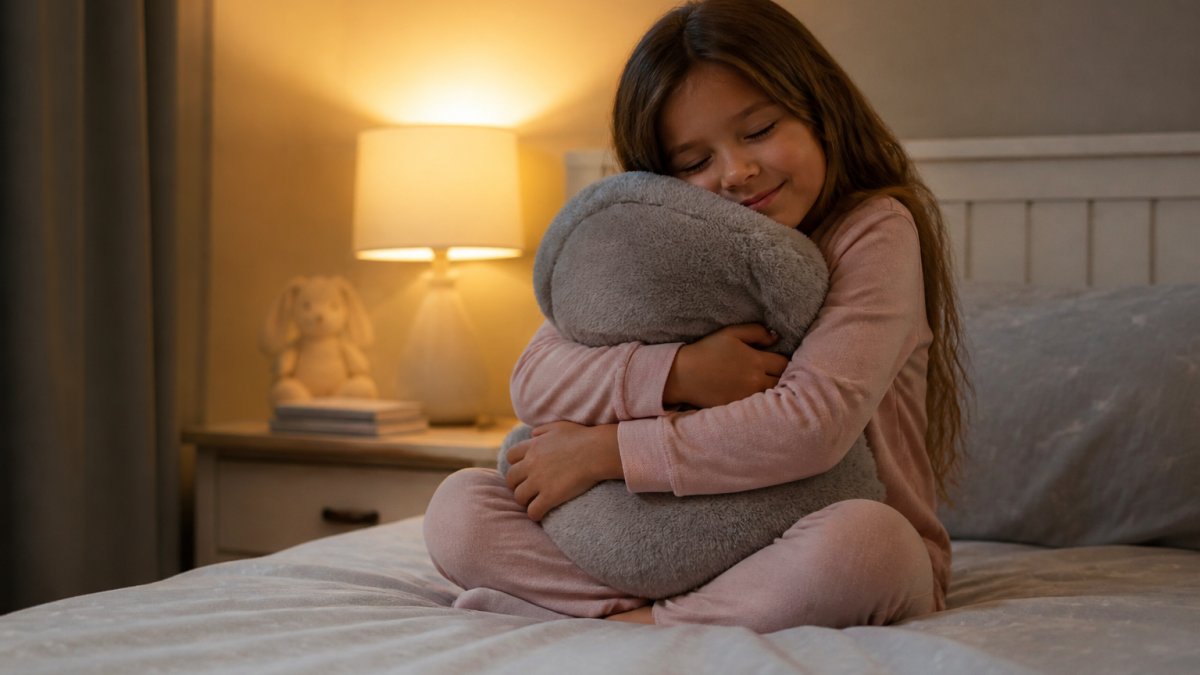
Introduce the pillow during calm moments, not as a last resort when your child is escalated. Let them hold it during stories and quiet time; when it's associated with positive moments, bedtime resistance decreases.
Many parents use the pillow as a transition object: the child holds it during wind-down, carries it to bed, and uses it as an anchor while falling asleep.
The pillow works best alongside dim lighting, consistent bedtimes, and a predictable routine. It's not a magic fix, but a powerful tool when integrated into your evening rhythm.
Common Mistakes Parents Make When Selecting a Comfort Pillow
Parents often skip critical steps when choosing a huggable comfort pillow for kids, then wonder why their child doesn't use it.
Ignoring Your Child's Input
Buying a pillow without your child's involvement is a common mistake. They're the one who has to hug it every night.
Choosing Based on Appearance Alone
A beautiful pillow that feels scratchy won't get used.
Underestimating the Importance of Breathability
Pillows that trap heat create sweating, discomfort, and nighttime resistance. Natural, breathable fabrics prevent sleep problems that cost far more in lost rest.
Buying Pillows That Can't Be Washed
A pillow you can't easily clean becomes a hygiene problem. Dust mites, sweat, and spills accumulate, and if washing is complicated you'll avoid it.
Expecting Instant Results
A new pillow takes time to integrate into your child's routine. Don't judge it after one night, give it a week of consistent use.
Conclusion
A well-chosen huggable comfort pillow transforms bedtime from a battle into a ritual your child looks forward to. The right pillow provides tactile comfort, fits your child's sensory needs, and simplifies cleanup.
At Fill Joy, we designed the Comfort Calm Pillow to address exactly what parents and children need: a soft, breathable pillow your child actually wants to hug, paired with a machine-washable cover that handles real-world family life. The gentle support and cuddly design help children settle into calmer bedtimes, while the removable, washable cover means less laundry and more peaceful evenings. Get started with the Comfort Calm Pillow and discover how a simple addition to your bedtime routine can create meaningful change in your family's sleep experience.

| Consideration | Why It Matters | What to Look For |
|---|---|---|
| Size and Fit | Wrong size creates discomfort or feels awkward to hold | Age-appropriate dimensions; child can wrap arms around it |
| Material Breathability | Prevents overheating and nighttime discomfort | Natural fabrics like cotton blends; avoid plastic-like covers |
| Machine Washable | Essential for hygiene and parent sanity | Removable cover; safe wash cycle instructions |
| Sensory Match | Child won't use a pillow that doesn't feel right | Matches your child's texture preferences (smooth, textured, weighted) |
| Construction Quality | Prevents falling apart during washing or use | Reinforced seams; secure stitching; durable fill |
Frequently Asked Questions
What is a huggable comfort pillow for kids, and how does it help at bedtime?
A huggable comfort pillow is a soft, child-sized pillow designed for children to hold, hug, and cuddle during sleep or relaxation. It provides tactile comfort and a sense of security that can help calm anxious children and make bedtime feel safer and more predictable. Many children with sensory sensitivities or bedtime resistance find that having a soft companion to squeeze reduces restlessness and makes settling into sleep easier.
Are kids body pillows safe for children, and what age can they use one?
Kids body pillows are generally safe when chosen appropriately for your child's age and size. Toddlers aged 2 and up can safely use a huggable pillow designed specifically for children, as long as it's properly sized and doesn't pose a suffocation risk. Always ensure the pillow is firm enough to hold its shape and that any removable covers are securely attached. If your child has breathing difficulties or medical concerns, consult your pediatrician before introducing a new sleep companion.
How do you wash a kids' hugging pillow, and will it hold up in the washing machine?
Look for a kids' pillow with a removable, machine-washable cover that you can wash separately from the pillow fill. Most quality pillows designed for children are built to withstand regular washing when cared for properly. Check the manufacturer's instructions for water temperature and detergent type. Remove the cover before washing, use a gentle cycle, and air-dry whenever possible to extend durability. A well-made pillow should remain soft and supportive after many washes.
What makes a weighted pillow for kids different from a regular huggable comfort pillow?
Regular huggable pillows focus on softness and comfort. Choose based on your child's sensory needs and comfort preferences.