


Choose a sensory pillow your child can comfortably reach around, hold against their body, and put down without help during an awake, supervised cuddle. Compare the pillow’s full dimensions and shape with something your child already enjoys hugging; an age label or a product photo alone does not establish a good fit.
- Compare sensory pillow sizes by reach, shape, and ease of holding—not age alone.
- Fill Joy’s Comfort Calm Pillow is a soft buddy to hug; check its measurements and age guidance before choosing.
- A longer pillow needs more room; a smaller outline does not automatically mean an easier hug.
- A bedtime cuddle does not establish that a pillow is suitable for overnight sleep.
How do you choose a sensory pillow size your child can hug?
Start with your child’s comfortable hug, then compare the pillow—not the other way around. While your child is awake and seated, notice how they hold a familiar cushion or stuffed animal. Look for relaxed shoulders, an easy grip, and enough freedom to change position without wrestling the object.
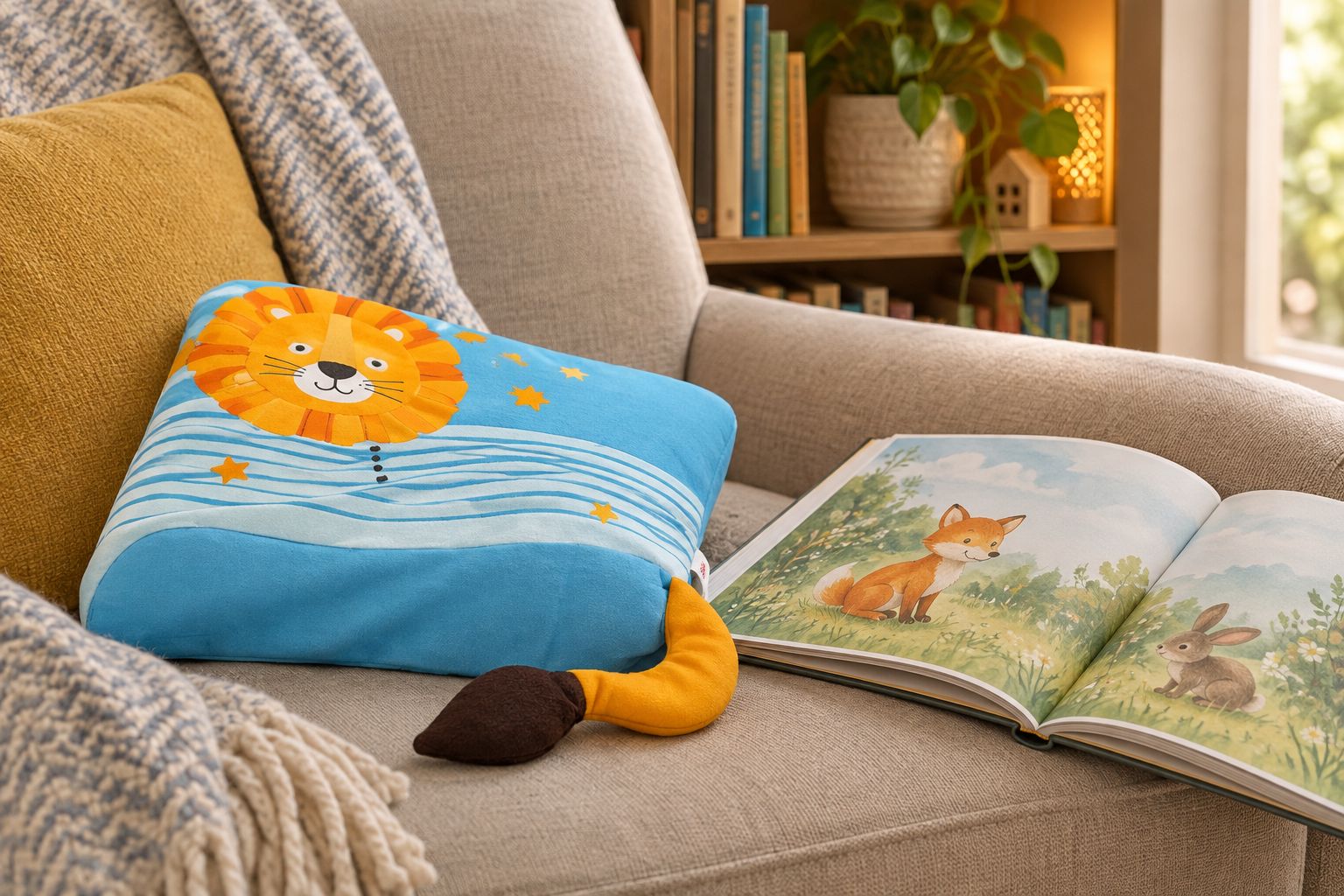
The Comfort Calm Pillow is described as a soft, cozy buddy to hug while winding down. That description explains its intended role, but it does not establish which dimensions will suit your child.
For a 2026 purchase, use the current product information rather than estimating scale from a lifestyle picture. Check the complete measurements, any stated age guidance, and the intended use before deciding.
| Fit option | Best for | Practical advantage | Limitation to check |
|---|---|---|---|
| Closer-to-body fit | A child who likes holding a buddy against their chest | Keeps the hug close to the body | A thick middle can still be difficult to reach around |
| Longer fit | A child who prefers holding an object along their lap | Offers a different holding position | Extra length takes more room and can be awkward to move |
| Familiar-object match | A parent comparing an online listing with something at home | Gives the measurements a physical reference | A similar outline does not establish similar weight or softness |
These are ways to compare fit, not standardized sensory pillow sizes or confirmed options in a particular product range. Choose the holding position your child actually prefers rather than treating a larger pillow as an upgrade.
Why this matters
A pillow can look appealing and still be awkward to hug. Length, width, thickness, and shape all affect how your child gets their arms around it, so a single measurement cannot answer the whole question.
The buying goal is modest: find an optional cozy buddy that suits your child’s way of holding things. You do not need a new product to create a warm bedtime routine, and choosing a particular size does not promise better sleep.
Check the fit before choosing a size
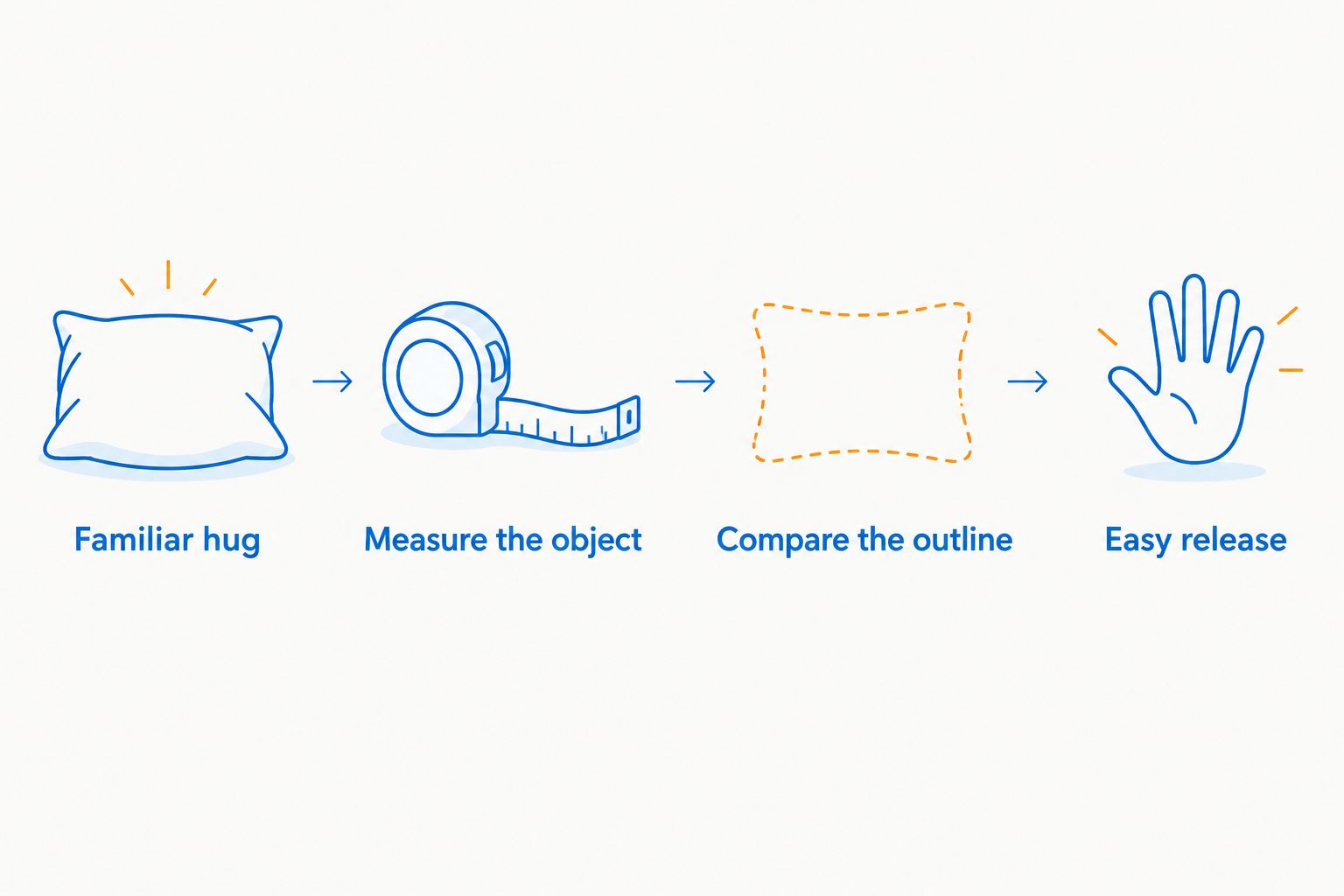
Start with a familiar hug
Ask your child to pick a cushion or stuffed animal they already like holding. Watch during an ordinary cuddle rather than asking them to demonstrate the biggest object they can lift. The useful reference is something they choose comfortably, not something they can manage briefly.
Notice where the object rests. Your child might hold it against their chest, keep it across their lap, or tuck it beside them while you read. Those are different preferences, and none requires a universal size recommendation.
Measure the object, not your child’s age
Use a tape measure to record the familiar object’s overall length, width, and thickness. Write down the units exactly as shown in the listing you plan to compare, or convert both sets of measurements to the same unit.
Measure the widest part as well as the main body when the shape has projecting features. A compact middle and a broad overall outline tell different stories about how much space the object occupies.
Treat the familiar object as a comparison tool, not a guaranteed match. Different filling, construction, or shape can change the feel even when the measurements look similar.
Compare the complete outline
Check whether the listing explains what each dimension measures. Overall length is not necessarily the length of the part your child will hold, and a front-facing photo does not show thickness clearly.
If the measurements leave an important question unanswered, ask for clarification before choosing. A useful question is whether the stated width covers the main body or the widest point of the whole pillow. That is more actionable than asking whether a pillow is simply big or small.
Check an easy release
During an awake, supervised cuddle, your child should be able to let go, change position, and put the pillow aside. Do not encourage a tighter squeeze or a longer hold to make an awkward fit work.
If your child repeatedly pushes the object away, needs help moving it, or holds it in an uncomfortable position, stop the comparison. A product does not need to earn a place in the routine just because its animal shape is appealing.
Closer-to-body fit: check the middle, not just the length
A closer-to-body fit is worth considering when your child already likes hugging a compact buddy against their chest. The useful comparison is the part their arms wrap around, not just the distance from one end to the other.
The advantage is a holding position that matches that preference. The trade-off is that a short but thick pillow can still require a wide reach. Small in a listing title does not settle that question.
For your 2026 comparison notes, record the full dimensions beside a brief description of the shape. A note such as wide middle is more useful than relying on a size label alone.
Longer fit: check the holding position and surrounding space
A longer outline is worth considering when your child prefers an object stretched across their lap during story time. Compare it with that position rather than assuming they will wrap their arms around the whole length.
Extra length also needs room beside a chair, across a lap, or wherever the awake cuddle happens. Check that your child can move the object without knocking nearby items or needing you to rearrange the space each time.
Choose a longer fit for an observed preference, not as a way to buy ahead. An object that is awkward now does not become a better current choice because your child will grow.
Why sensory pillow fit varies
These checks explain why two pillows with similar headline measurements can feel different to hold. Use them as questions to answer from the listing or a hands-on comparison, not as assumed features of any product.
- Length: Establish which direction the measurement covers and whether it includes projecting parts.
- Width: Compare the main body with the widest overall point; either can affect the available holding space.
- Thickness: Check the depth your child’s arms need to reach around, not just the front outline.
- Shape: Notice where the narrower and wider sections sit relative to your child’s preferred grip.
- Holding position: Compare a chest hug with a lap cuddle only if your child actually enjoys both.
- Weight: Check stated product information separately; dimensions do not establish how easy an object is to lift.
For a 2026 shortlist, keep these details together rather than comparing one product’s length with another product’s marketing size label. If a detail is unclear, resolve it before making the comparison more precise than the information allows.
Where a cozy buddy fits into your bedtime routine
Fill Joy’s Comfort Calm Pillow is best for parents seeking a soft buddy to hug, with size suitability checked separately. Its stated appeal is the cozy cuddle, not a verified fit for every child or a medical benefit.
That distinction keeps the purchase practical. Consider the product if your child likes the idea of a soft bedtime buddy, then check its current measurements and age guidance against your own requirements. Do not use the product description as evidence of treatment for anxiety, sensory conditions, or sleep difficulties.
An optional routine can be as simple as offering a cuddle during a story, then letting your child put the buddy aside. Keep the activity flexible: some evenings your child might prefer a familiar toy, a book, or no object at all.
Should I choose a sensory pillow by my child’s age?
Choose by confirmed age guidance first, then check physical fit and intended use. Age guidance and comfortable hugging answer different questions; neither replaces the other.
For your 2026 purchase, read the current instructions rather than inferring suitability from the apparent age of a child in a photograph. If the age guidance is unclear, ask before using the product with your child.
Is a bigger sensory pillow better for hugging?
A bigger sensory pillow is not automatically better for hugging. Choose the outline your child can comfortably hold and release in their preferred position.
A larger object takes more surrounding space, while a smaller but thicker object can still be awkward to wrap arms around. Compare all the measurements before deciding which is the closer match.
Can my child sleep with the pillow after the cuddle?
An awake cuddle does not establish that a pillow is suitable for overnight sleep. Follow the product’s instructions and applicable safe-sleep guidance rather than making that decision from size alone.
Keep pillows and other soft objects out of an infant’s sleep space. For older children, check the product’s stated age guidance and intended use; a supervised reading-time setup is not evidence of overnight suitability.
FAQ
What’s the best way to compare sensory pillow sizes online?
Compare the full listed dimensions with a cushion or stuffed animal your child already enjoys hugging. Check length, width, thickness, and shape rather than relying on a small or large label.
How do I know whether a pillow is too big for my child to hug?
A pillow is a poor fit if your child struggles to reach around it, change position, or put it aside during an awake, supervised cuddle. Do not encourage your child to keep holding an uncomfortable object.
Do sensory pillow sizes correspond to children’s ages?
An age label does not establish comfortable fit. Follow confirmed age guidance, then compare the pillow’s measurements and intended use with your child’s needs.
Can I judge pillow size from the product photo?
A product photo alone does not establish pillow size. Use written dimensions and check which parts of the pillow those measurements include.
Is the Comfort Calm Pillow suitable for every child?
The Comfort Calm Pillow is described as a soft, cozy buddy to hug, not as a universal fit. Check its current measurements, age guidance, and instructions before choosing it for your child.
Does my child need a sensory pillow for bedtime?
Your child does not need a sensory pillow to have a cozy bedtime routine. A familiar story, an existing toy, or a quiet moment together can be part of the routine without a new purchase.
Will choosing the right pillow size make my child sleep better?
Choosing a comfortable pillow size does not establish a sleep benefit. Use fit checks to judge ease of holding, not to predict sleep or medical outcomes.
One last thing
Before completing a 2026 order, write down which measurement would change your decision. It might be the thickness around the middle or the overall width across an animal shape; identifying that question makes it easier to request useful clarification.
If you cannot explain how the listed dimensions compare with your child’s familiar hug, pause the purchase. Fill Joy can be part of an optional cozy routine, but the best buying decision is one you can make without guessing about fit.